
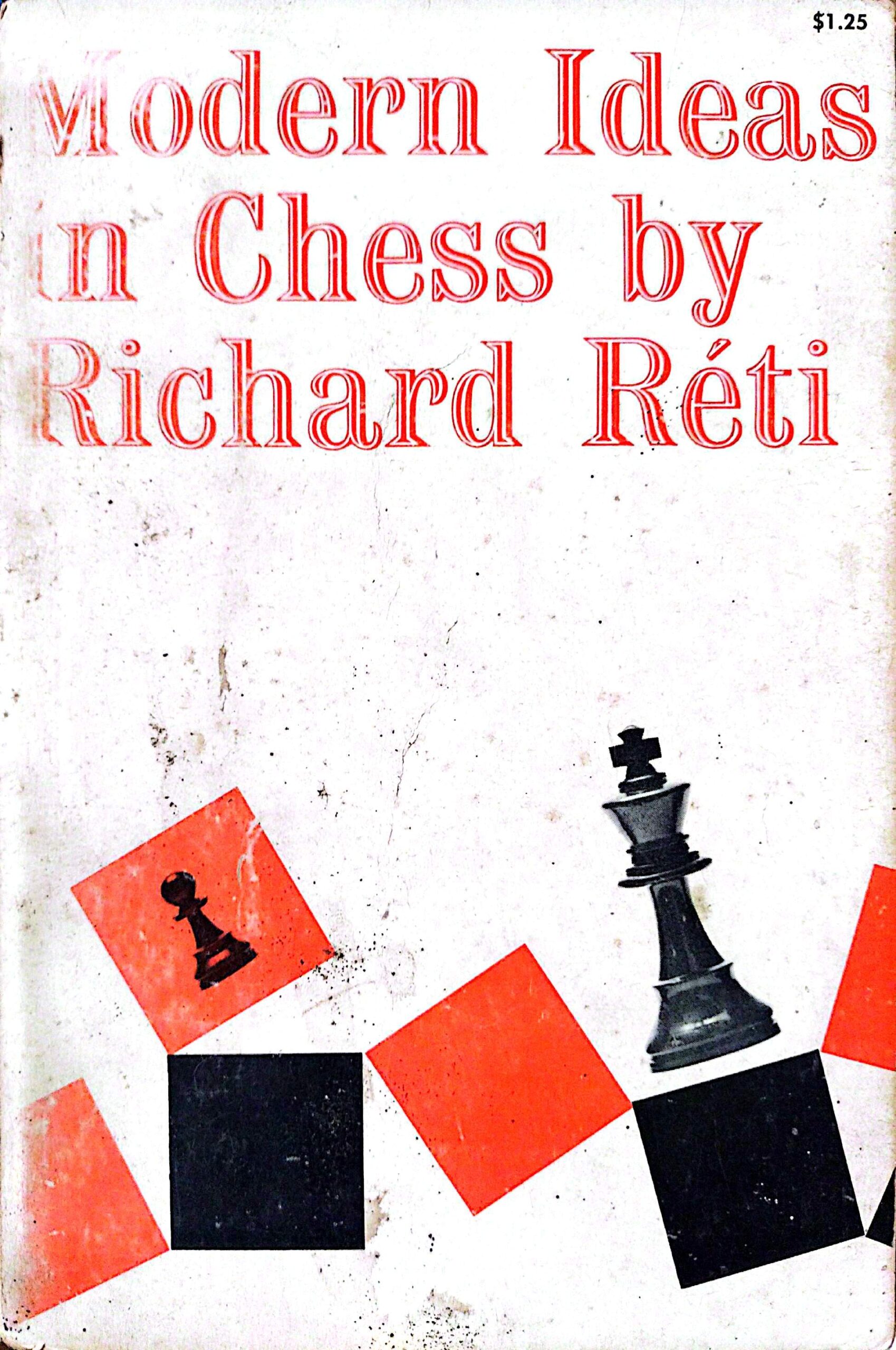
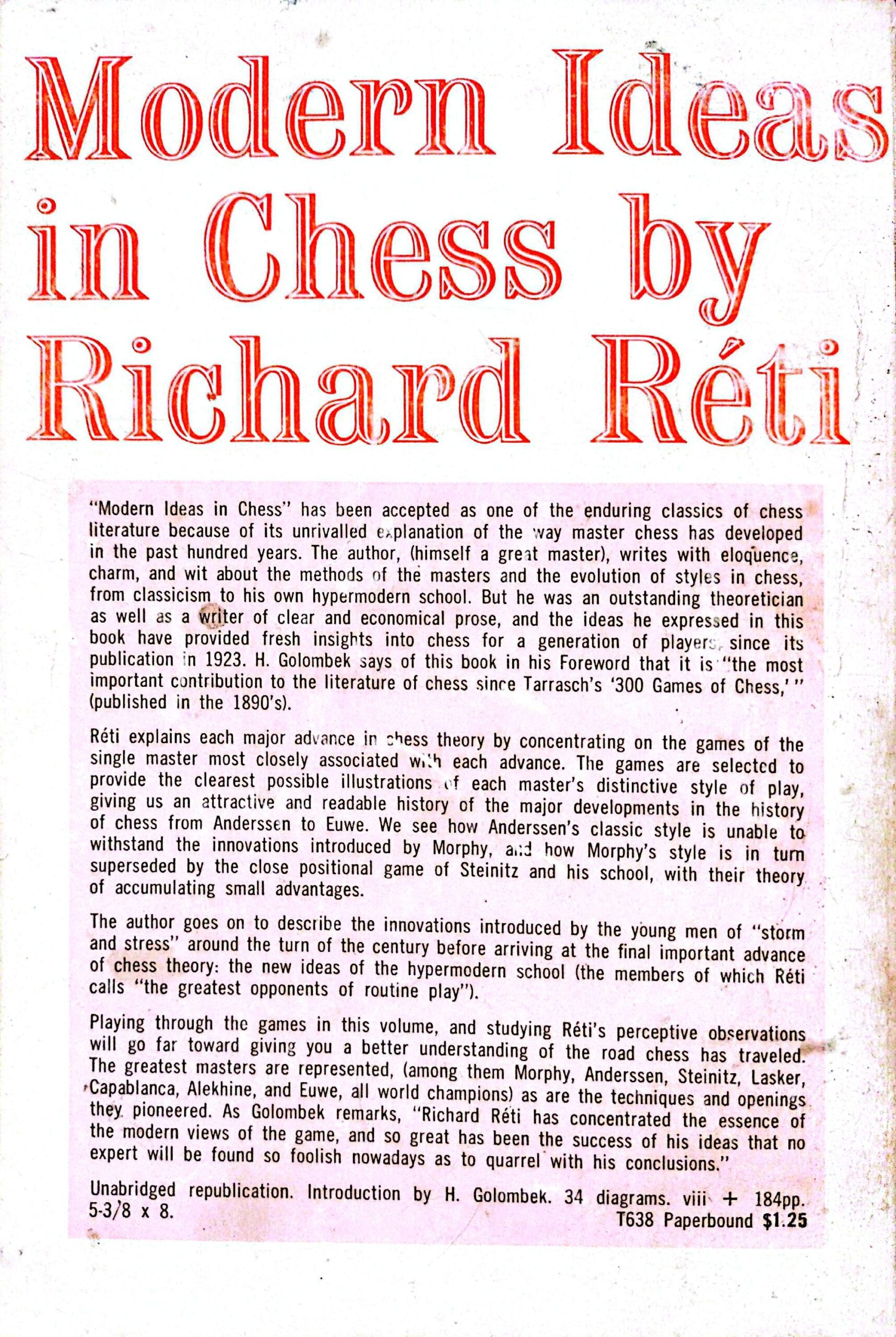
Modern Ideas in Chess by Richard Réti
Starting bid: $5.00
Item condition: Used
Ending: June 14, 2026 8:00 pm
Timezone: America/New_York
- Shipping : Less than one week
Modern Ideas in Chess by Richard Réti is a groundbreaking chess strategy book that introduced and explained the principles of the hypermodern school of chess.
The book challenges classical chess doctrines that emphasized occupying the center with pawns, arguing instead that the center can often be controlled indirectly through piece pressure, flexibility, and strategic restraint.
Réti explains key hypermodern concepts such as fianchetto development, dynamic pawn structures, prophylaxis, and allowing the opponent to build a center that can later become a target of attack.
A major focus is on the evolution of chess thought, showing how modern positional ideas emerged from practical master play and changed strategic understanding in the early 20th century.
Through annotated games and theoretical discussion, the book demonstrates how flexibility, coordination, and dynamic planning can outweigh rigid classical methods.
A foundational and historically important resource for intermediate to advanced players seeking to understand modern positional chess, hypermodern theory, and the evolution of strategic chess ideas.
Modern Ideas in Chess by Richard Réti is a groundbreaking chess strategy book that introduced and explained the principles of the hypermodern school of chess.
The book challenges classical chess doctrines that emphasized occupying the center with pawns, arguing instead that the center can often be controlled indirectly through piece pressure, flexibility, and strategic restraint.
Réti explains key hypermodern concepts such as fianchetto development, dynamic pawn structures, prophylaxis, and allowing the opponent to build a center that can later become a target of attack.
A major focus is on the evolution of chess thought, showing how modern positional ideas emerged from practical master play and changed strategic understanding in the early 20th century.
Through annotated games and theoretical discussion, the book demonstrates how flexibility, coordination, and dynamic planning can outweigh rigid classical methods.
A foundational and historically important resource for intermediate to advanced players seeking to understand modern positional chess, hypermodern theory, and the evolution of strategic chess ideas.
Similar Products

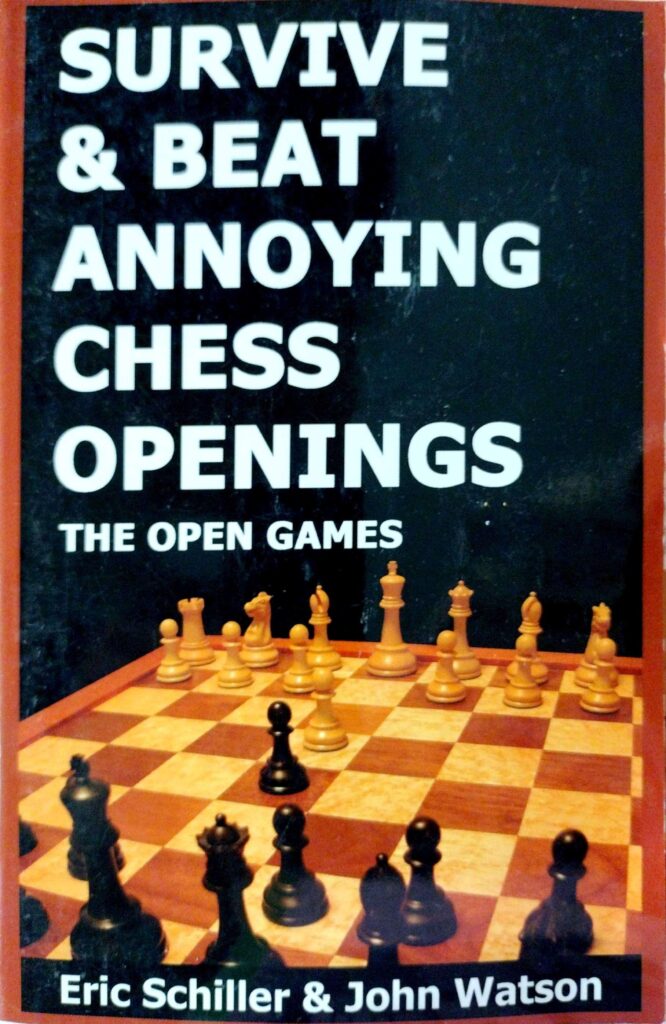
Survive & Beat Annoying Chess Openings by Eric Schiller and John Watson
- Starting bid: $9.00