
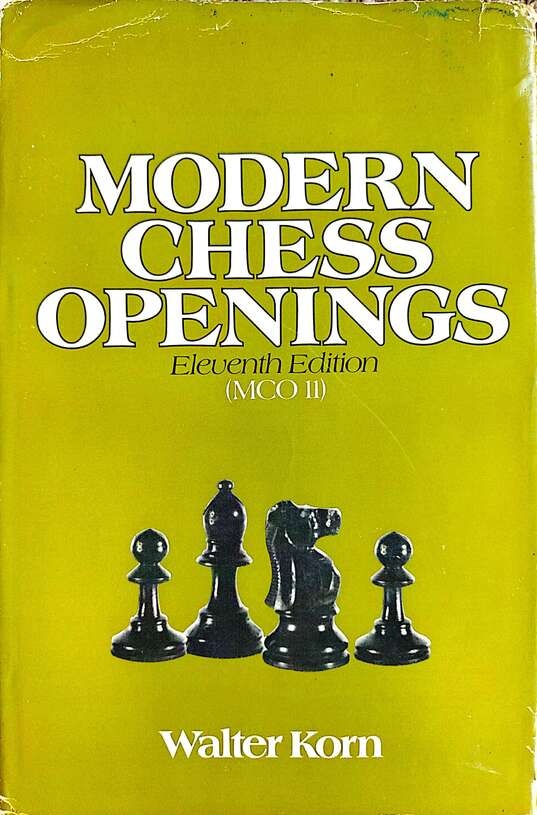
Modern Chess Openings (MCO 11) by Walter Korn
Starting bid: $8.00
Item condition: Used
Ending: June 28, 2026 8:00 pm
Timezone: America/New_York
- Shipping : Less than one week
Modern Chess Openings (MCO 11) by Walter Korn
The 11th edition of Modern Chess Openings (MCO), edited by Walter Korn, is a classic opening encyclopedia and one of the most widely used reference works in chess literature. It provides a structured and comprehensive survey of major chess openings for both White and Black, reflecting established theoretical knowledge of its time.
Rather than teaching through explanations or plans, this edition functions primarily as a theoretical reference manual, presenting dense variations, main lines, and key continuations used in competitive play. It is designed for players who want to research, verify, and compare opening theory rather than learn openings from first principles.
Topics Covered
- Comprehensive survey of all major chess openings
- King’s Pawn (1.e4) systems and defenses
- Queen’s Pawn (1.d4) openings and responses
- Flank openings (1.c4, 1.Nf3, etc.)
- Major defenses such as Sicilian, French, Caro-Kann, and others
- Indian Defenses (King’s Indian, Nimzo-Indian, Grunfeld, etc.)
- Closed and semi-closed openings
- Extensive main-line theoretical variations
- Opening transpositions and move-order nuances
- Standard tournament-relevant theoretical repertoire lines
Key Features
- Major encyclopedic reference of chess openings
- Dense and detailed theoretical variations
- Coverage of both White and Black repertoires
- Structured for lookup and analysis rather than instruction
- Reflects established tournament theory of its era
- Useful for comparing and verifying opening lines
- One-volume opening encyclopedia format
- Classic work in the long-running MCO series
Recommended For
Advanced club players, tournament competitors, analysts, and serious opening students who want a comprehensive reference source for chess openings, especially for checking variations, studying main lines, and building theoretical understanding rather than learning from explanatory instruction.
Modern Chess Openings (MCO 11) by Walter Korn
The 11th edition of Modern Chess Openings (MCO), edited by Walter Korn, is a classic opening encyclopedia and one of the most widely used reference works in chess literature. It provides a structured and comprehensive survey of major chess openings for both White and Black, reflecting established theoretical knowledge of its time.
Rather than teaching through explanations or plans, this edition functions primarily as a theoretical reference manual, presenting dense variations, main lines, and key continuations used in competitive play. It is designed for players who want to research, verify, and compare opening theory rather than learn openings from first principles.
Topics Covered
- Comprehensive survey of all major chess openings
- King’s Pawn (1.e4) systems and defenses
- Queen’s Pawn (1.d4) openings and responses
- Flank openings (1.c4, 1.Nf3, etc.)
- Major defenses such as Sicilian, French, Caro-Kann, and others
- Indian Defenses (King’s Indian, Nimzo-Indian, Grunfeld, etc.)
- Closed and semi-closed openings
- Extensive main-line theoretical variations
- Opening transpositions and move-order nuances
- Standard tournament-relevant theoretical repertoire lines
Key Features
- Major encyclopedic reference of chess openings
- Dense and detailed theoretical variations
- Coverage of both White and Black repertoires
- Structured for lookup and analysis rather than instruction
- Reflects established tournament theory of its era
- Useful for comparing and verifying opening lines
- One-volume opening encyclopedia format
- Classic work in the long-running MCO series
Recommended For
Advanced club players, tournament competitors, analysts, and serious opening students who want a comprehensive reference source for chess openings, especially for checking variations, studying main lines, and building theoretical understanding rather than learning from explanatory instruction.
Similar Products