
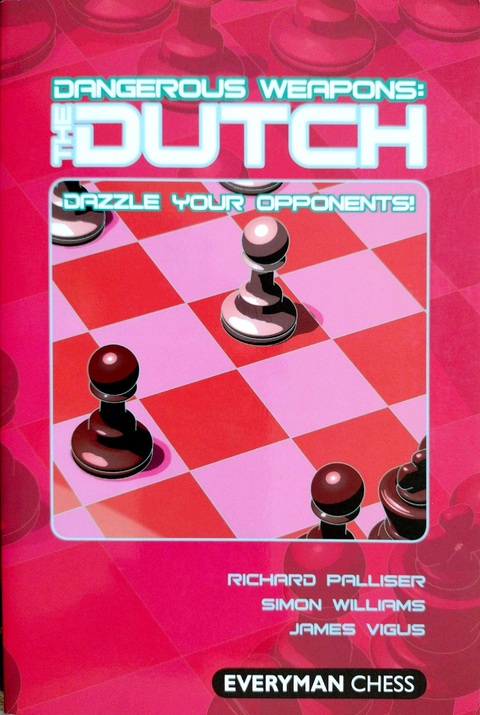
Dangerous Weapons: The Dutch by Richard Palliser, Simon Williams, and James Vigus
Starting bid: $14.00
Item condition: Used
Ending: August 9, 2026 12:00 am
Timezone: America/New_York
- Shipping : Less than one week
Dangerous Weapons: The Dutch by Richard Palliser, Simon Williams, and James Vigus
Written by Richard Palliser, Simon Williams, and James Vigus, Dangerous Weapons: The Dutch is a theoretical chess opening guide focused on generating practical, surprise-based repertoire ideas in the Dutch Defence. Published by Everyman Chess, it is part of the well-known Dangerous Weapons series, known for its emphasis on sharp, creative, and unconventional opening play.
The book presents offbeat and little-explored Dutch systems designed to take opponents out of mainline theory and steer the game into dynamic, tactical, and imbalanced positions.
Topics Covered
- Surprise weapons in the Dutch Defence
- Offbeat and aggressive Dutch variations
- Anti-mainline systems for both sides
- Critical tactical ideas in Dutch structures
- Typical pawn formations in the Dutch
- Move-order tricks and transpositional ideas
- Practical middlegame attacking plans
- Hypermodern concepts and counterplay strategies
- Psychological pressure in opening preparation
- Modern theoretical novelties and ideas
Key Features
- Written by experienced opening theoreticians and grandmaster-level authors
- Focus on surprise value and practical repertoire building
- Part of the popular Dangerous Weapons series
- Emphasis on sharp, unbalanced, and tactical positions
- Designed to avoid heavy mainstream Dutch theory
- Includes creative and modern opening ideas
- Strong for tournament preparation and surprise weapons
Recommended For
Ideal for club players, tournament competitors, and attacking players who want to surprise opponents with unusual Dutch Defence systems and create dynamic, fighting positions from the opening.
This book is especially useful for players who prefer initiative-based chess, enjoy tactical complexity, and want to reduce dependence on mainline theoretical preparation while maintaining competitive, practical strength.
Dangerous Weapons: The Dutch by Richard Palliser, Simon Williams, and James Vigus
Written by Richard Palliser, Simon Williams, and James Vigus, Dangerous Weapons: The Dutch is a theoretical chess opening guide focused on generating practical, surprise-based repertoire ideas in the Dutch Defence. Published by Everyman Chess, it is part of the well-known Dangerous Weapons series, known for its emphasis on sharp, creative, and unconventional opening play.
The book presents offbeat and little-explored Dutch systems designed to take opponents out of mainline theory and steer the game into dynamic, tactical, and imbalanced positions.
Topics Covered
- Surprise weapons in the Dutch Defence
- Offbeat and aggressive Dutch variations
- Anti-mainline systems for both sides
- Critical tactical ideas in Dutch structures
- Typical pawn formations in the Dutch
- Move-order tricks and transpositional ideas
- Practical middlegame attacking plans
- Hypermodern concepts and counterplay strategies
- Psychological pressure in opening preparation
- Modern theoretical novelties and ideas
Key Features
- Written by experienced opening theoreticians and grandmaster-level authors
- Focus on surprise value and practical repertoire building
- Part of the popular Dangerous Weapons series
- Emphasis on sharp, unbalanced, and tactical positions
- Designed to avoid heavy mainstream Dutch theory
- Includes creative and modern opening ideas
- Strong for tournament preparation and surprise weapons
Recommended For
Ideal for club players, tournament competitors, and attacking players who want to surprise opponents with unusual Dutch Defence systems and create dynamic, fighting positions from the opening.
This book is especially useful for players who prefer initiative-based chess, enjoy tactical complexity, and want to reduce dependence on mainline theoretical preparation while maintaining competitive, practical strength.
Similar Products